Dundas Medal 2025 awarded to Specialist Palliative Care Service at Sheffield Teaching Hospitals
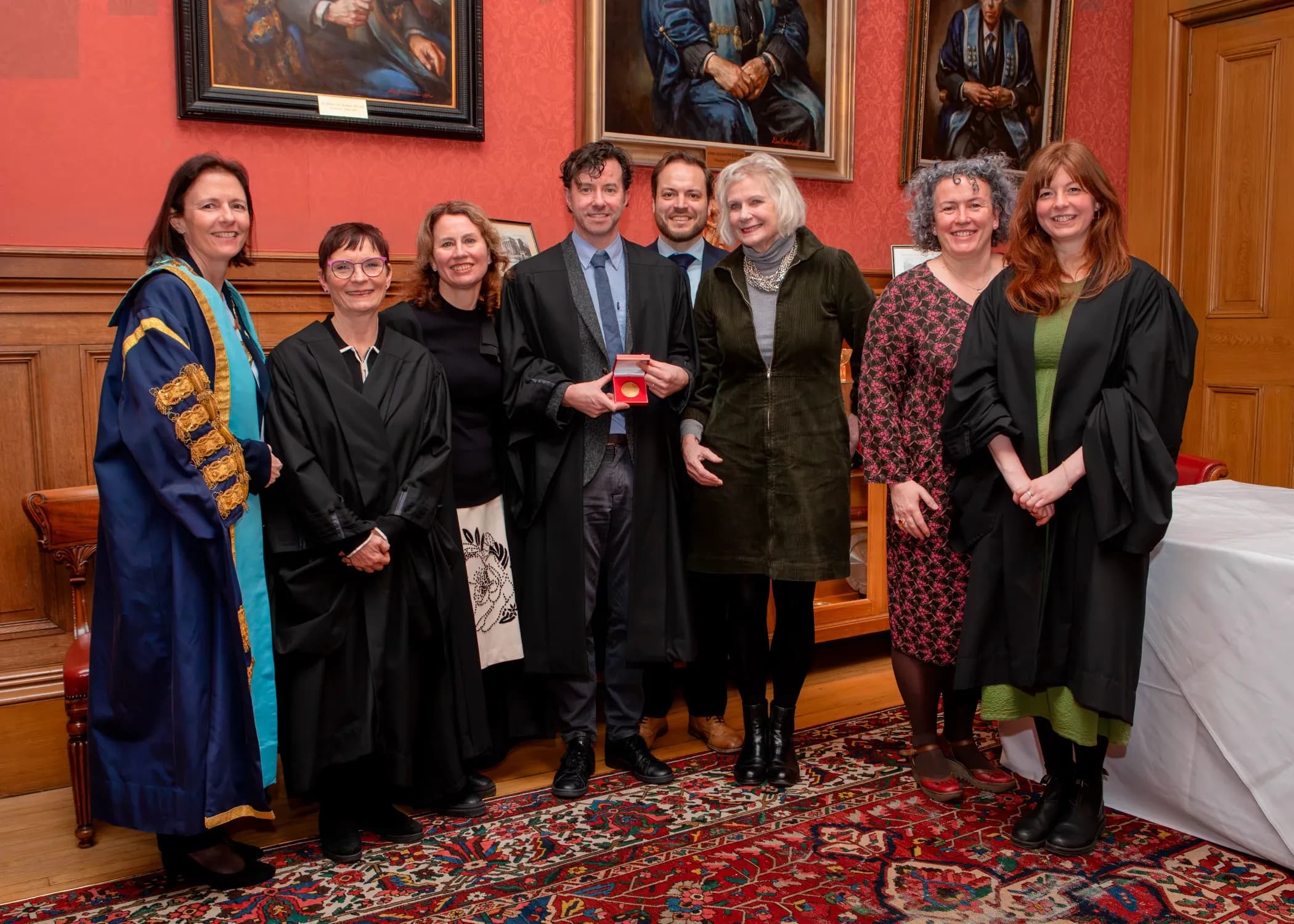
The Dundas Medal is awarded jointly by PATCH and The Royal College of Surgeons Edinburgh recognising professional excellence in the field of palliative care.
On the 6th of February 2026, the specialist Palliative Care Team at Sheffield Teaching Hospitals was awarded the Dundas Medal. Presented by Dr Clare-Ellen McNaught, President of the Royal College of Surgeons of Edinburgh, at a prestigious ceremony at the Royal College of Surgeons Edinburgh, the team was recognised for its achievements.
This team demonstrated what can be achieved when teamwork and innovative thinking are combined in order to improve services for patients. The team used their experiences during the Covid pandemic to rethink how they operated. As a result, there is now a 7 day a week liaison service, a rapid access clinic and an 18-bed inpatient palliative care unit within the Sheffield Teaching Hospitals.
Further additional and important services were also set up including: malignancy of unknown origin (MUO) / Cancer of unknown primary (CUP) service; Intractable cancer pain clinic; Chimeric antigen receptor T-cell (CAR-T) therapy service; Integrated respiratory disease/palliative care service; Collaborative working with General Practice Out-Of-Hours (OOH) service. The team also provides educational support for nurses and medical students.
As active participants in the National Audit of Care at the End-of-Life (NACEL), they have demonstrated their effectiveness: the percentage of bereaved surveyed who rated the quality of care provided to the person who died as ‘excellent’ or ‘good’ has risen from 67% (2019) to 88% (2024).
Through its active research programme the team contributes to national studies including: Equitable Bereavement Care for all Ethnicities; Improving healthcare experiences for those affected by incurable head and neck cancer; Methylphenidate versus Placebo for Fatigue in Advanced Cancer (MePFAC); Exploring Pathways to Optimise Care in bowel obstruction from cancer (EPOC).
They also engage with their local community in innovative ways; a sewing group; the design of a bereavement bag (a lilac bag with a closing lid for the effects of deceased patients). This replaces the generic plastic bag previously provided. The lilac colour indicates to staff that the person carrying the bag may require additional care.
Commenting on this recognition for the Dundas Medal, Medical Director Dr Pam Levack said: “This Award very deservedly goes to a compassionate and innovative team who have done much to address the problems of palliative care in the community they serve. We were so pleased to be part of this wonderful ceremony hosted by the Royal College of Surgeons, Edinburgh, with whom we jointly award the Dundas Medal.”
The Dundas medal was established in memory of Dr. Charles Robert (Bertie) Dundas, a consultant anaesthetist at the Aberdeen Royal Infirmary and a clinical senior lecturer at the University of Aberdeen for over 30 years. He died in 2014 from hepatobiliary cancer.
His family provided the legacy for this medal to acknowledge the importance of good palliative care for patients approaching the end of life, particularly in a hospital setting. The need for appropriate holistic care including pain and symptom control, as well as clear communication with patients and families, is fundamental for those with life limiting conditions and especially at the end of life. The Dundas Medal aims to raise the profile of this need and entitlement across the UK and is awarded jointly by PATCH and The Royal College of Surgeons Edinburgh.